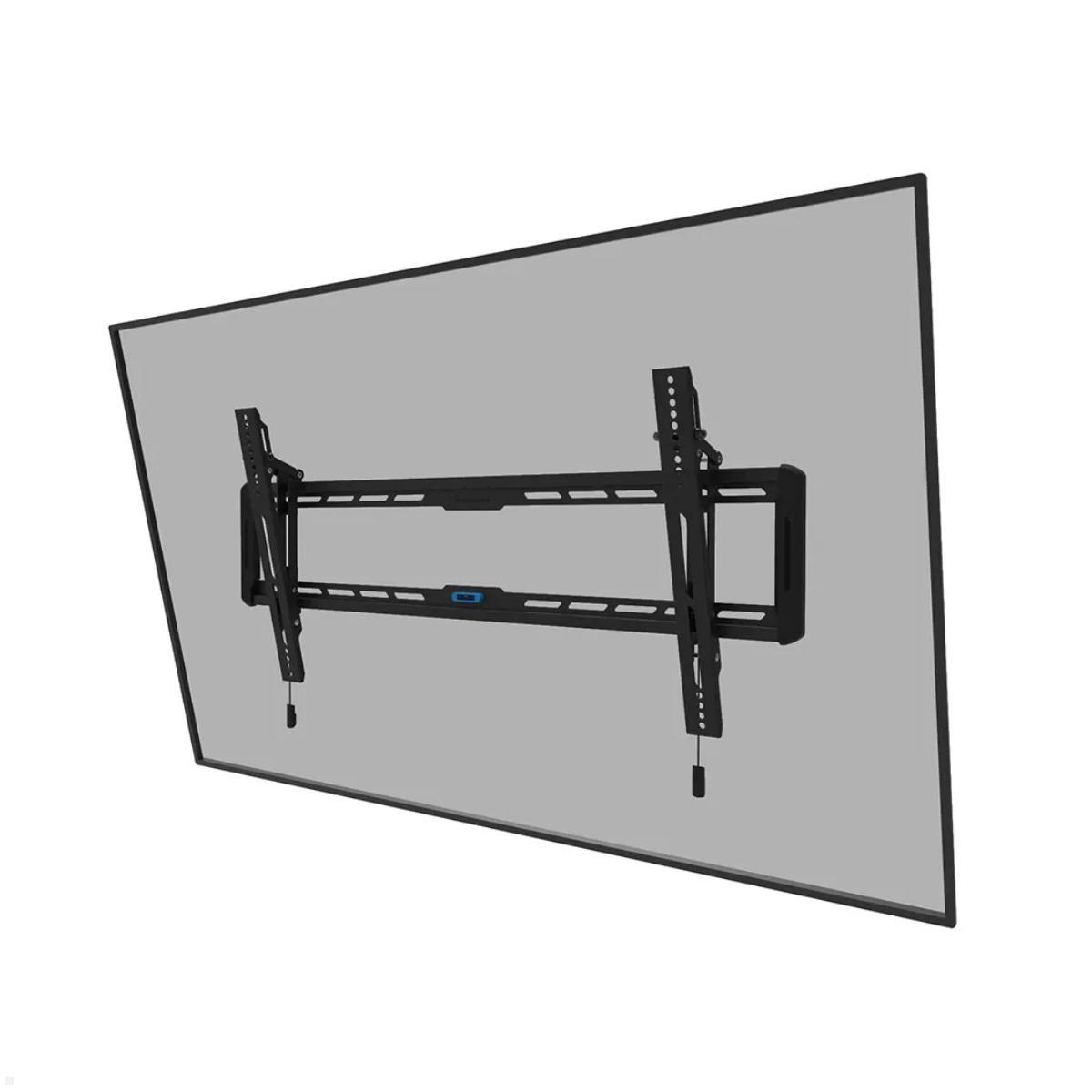
TV Wall Mount Buying Guide

A TV wall mount is one of the most popular solutions for integrating a television into a room in a stylish and space-saving way. Modern flat-screen TVs are designed to be wall-mounted – this makes them look more elegant, frees up space in the living room, and allows for optimal positioning. But which wall mount is right for your TV? Several factors play a role in the purchase: screen size, VESA standard, load capacity, adjustability, and, of course, the wall's construction. This TV wall mount buying guide will tell you what to look for when buying and how to find the right mount for your television.
With such a wide selection of TV wall mounts available, it's worth taking a closer look before buying. Not every mount is suitable for every television or every living situation. Doing your research beforehand can help you avoid making the wrong purchase and ensures that your television is securely mounted and optimally positioned in the room. This guide will help you understand the most important criteria and select the right TV wall mount step by step.
Why is a TV wall mount a good idea?
A TV wall mount offers numerous advantages over a traditional TV stand or TV cabinet. Especially in modern living spaces, televisions are increasingly being mounted directly on the wall. A major advantage is the space-saving installation. Since no additional furniture is needed for the television, the room appears tidier and more spacious. At the same time, the television can be mounted at the exact desired height, which significantly improves viewing comfort.
Flexibility also plays an important role. Many wall mounts allow the television to be tilted or swiveled. This makes it possible to perfectly adjust the viewing angle to different seating positions in the room. Furthermore, wall mounting also offers greater safety. A securely mounted television cannot be accidentally knocked over – an important advantage in households with children or pets.
Another advantage is the improved integration of the television into the room design. Especially in modern living spaces, the television is increasingly used as a decorative element. With a suitable wall mount, the TV can be mounted very flush against the wall, creating a particularly elegant and minimalist look. A wall mount can also be useful in smaller apartments or flats. Since no additional TV cabinet is needed, more space remains for other furniture or an open-plan layout. Discover more advantages of TV wall mounts in our dedicated article!
What types of TV wall mounts are there?
TV wall mounts differ primarily in their adjustability. Depending on the intended use and room layout, a different type may be more suitable.
- Fixed Mounts
A fixed wall mount attaches the television flush to the wall. This type is particularly suitable for rooms where the television is always viewed from the same position. The minimal distance to the wall creates a particularly elegant and minimalist look. Fixed mounts are also usually less expensive and very stable. They are especially suitable for living rooms where the television is mounted directly opposite the seating position and no lateral adjustment is necessary. - Tiltable TV Wall Mounts
With a tiltable TV wall mount, the television can be tilted up or down. This is particularly practical if the television is mounted somewhat higher, for example, above a lowboard or fireplace. The tilt function also helps reduce distracting light reflections. Tiltable mounts are frequently used when the television is mounted slightly above ideal eye level. The tilt function allows you to adjust the viewing angle, ensuring a comfortable viewing experience. - Swivel TV Wall Mount
A swivel or extendable TV wall mount offers maximum flexibility. The television can be rotated sideways or pulled away from the wall. This solution is particularly suitable for:- large living rooms
- open-plan living areas
- multiple seating positions in the room
- televisions that should also be visible from the kitchen or dining area
- Swivel mounts are especially popular in open-plan kitchens or large living areas. Here, the television can be flexibly positioned so that it remains visible from different parts of the room.
TV wall mount for 55, 65, or 75-inch TVs – which one fits your television?
When choosing the right TV wall mount, the screen size (e.g., 55 inches, 65 inches, or 75 inches) plays a crucial role. Generally speaking, the larger the TV, the more stable the wall mount should be. While smaller TVs can easily be mounted with a simple bracket, larger devices usually require a wall mount with a higher load capacity and greater VESA compatibility. Therefore, always ensure that the mount supports both the screen size and the weight of your television. Many modern TV wall mounts are suitable for multiple screen sizes, offering a flexible solution for different TV models.
Especially with large televisions, a swiveling or tilting TV wall mount is often recommended. This allows you to optimally adjust the viewing angle and ensures that the picture remains clearly visible from various seating positions in the room.
What does the VESA standard mean for TV wall mounts?
An important term when buying a TV wall mount is the VESA standard. It describes the distance between the mounting holes on the back of the television.
This distance is specified in millimeters. Common VESA dimensions are, for example:
- 100 × 100 mm
- 200 × 200 mm
- 300 × 300 mm
- 400 × 400 mm
- 600 × 400 mm
For a wall mount to be installed on a television, the VESA standard of the mount must match the mounting hole pattern of the television. Most modern wall mounts support multiple VESA formats and are therefore compatible with many televisions.
However, if the VESA standard of your television does not match the desired wall mount, there is a practical solution: VESA adapters. These adapter plates are mounted between the television and the wall mount and compensate for different hole spacings. This allows TVs with a different VESA standard or devices without compatible mounting holes to be attached to a wall mount. VESA adapters thus serve as a connecting element between the screen and the mount, significantly expanding the compatibility of many mounting systems.
The VESA standard was developed to enable a standardized mounting system for screens and brackets. This allows TVs from different manufacturers to be combined with compatible mounts, as long as the hole spacing matches. If you are unsure which VESA standard your TV uses, you can either consult the user manual or measure the holes directly on the back of the TV. You can also find additional useful information about the VESA standard here.
Which TV wall mount is suitable for which television?
Not every TV wall mount fits every television. Several technical factors play a role in the purchase and should definitely be considered. A crucial point is the screen size of the television. Many manufacturers specify exactly which screen sizes a mount is suitable for. Typical specifications include:
- TV wall mount for 32–55 inches
- TV wall mount for 55–65 inches
- TV wall mount for 65–75 inches
In addition to the screen size, the weight of the television is also crucial. The maximum load capacity of the mount should always exceed the actual weight of the device.
How much weight can a TV wall mount support?
The maximum load capacity is a crucial safety factor. Every TV wall mount has a specified maximum weight limit, which should absolutely be observed.
Typical load capacities are:
- Small TVs: approximately 20–30 kg
- Medium-sized TVs: approximately 30–45 kg
- Large TVs: up to 60 kg or more
In addition to the mount's load capacity, the wall's construction also plays an important role. Solid walls made of concrete or brick provide a very stable foundation, while special anchors must be used for drywall. Generally, it is recommended to choose a wall mount whose maximum load capacity is significantly higher than the weight of the TV. This provides an additional safety margin. Especially with larger TVs of 65 or 75 inches and above, it is also important to ensure that both the mount and the wall fixing are suitable for the increased weight.
How far should the TV be from the wall?
The distance between the TV and the wall depends on the type of mount.
- Flat wall mounts often have a distance of only a few centimeters from the wall. This makes the TV look particularly elegant, almost like a picture on the wall.
- Swivel mounts, on the other hand, require more space because the TV can be pulled forward. The distance here can range from 10 to 50 cm, depending on the model.
The correct distance from the wall depends largely on usage. If the TV is primarily viewed head-on, a flat mount with a small distance is sufficient. However, if the TV needs to be flexibly positioned or if connections need to remain easily accessible, a swivel mount with a greater distance may be more suitable.
What else should you consider when buying a TV wall mount?
Besides VESA standard and load capacity, there are other factors to consider when making your purchase.
- Cable management
Many high-quality wall mounts have integrated cable channels. This allows you to neatly route power and HDMI cables. Good cable management not only improves the appearance but also prevents cable clutter behind the TV. - Easy installation
A good mounting system makes installation considerably easier. Mounts with a quick-release mechanism are particularly practical. These systems make it easier to attach and detach the TV after mounting, which is especially helpful for maintenance or cable replacement. - Adjustability
Depending on the room, it can be useful to choose a mount with swivel or tilt functionality. Especially in larger rooms or with multiple seating positions, a flexible mount can make using the TV much more comfortable.
Finding the Right TV Wall Mount
A TV wall-mount is a practical and stylish solution for mounting your television securely and in a space-saving manner. The right mount ensures an optimal viewing position and a Modern living space.
When buying a wall mount, you should pay particular attention to the following points:
- Suitable screen size
- Sufficient load-bearing capacity
- Compatible VESA standard
- Desired range of motion
- Stable wall mounting
If these criteria are taken into account, nothing stands in the way of a secure and convenient TV installation. With the right TV wall mount, the television can not only be mounted securely but also perfectly integrated into your living space design. By considering these criteria, you can quickly find the right wall mount for your television and securely mount it to the wall.
Comparison table
|
Mounting type |
Advantages |
Disadvantages |
Ideal for |
|
Fixed TV wall mount |
very flat, inexpensive, stable |
no movement possible |
TV directly in front of the sofa |
|
Tiltable wall mount |
better viewing angles, less glare |
side swivel not possible |
TVs mounted higher |
|
Swivel wall mount |
maximum flexibility, ideal for large rooms |
greater distance from the wall |
multiple seating positions |
Frequently Asked Questions about TV Wall Mounts (FAQ)
Does every TV wall mount fit every TV?
No. The VESA standard and the weight of the TV are the most important factors. The wall mount must support both the mounting pattern (VESA) and the maximum load capacity.
How do I find out my TV's VESA standard?
The VESA standard is usually listed in the user manual or on the manufacturer's website. Alternatively, you can simply measure the distance between the mounting holes on the back of the TV with a tape measure.
How high should a TV be mounted on the wall?
Ideally, the center of the screen should be at approximately eye level when sitting on the sofa. In many living rooms, the optimal height is between about 100 and 120 cm above the floor.
Which TV wall mount is suitable for large TVs?
For TVs of about 65 or 75 inches and larger, a sturdy wall mount with a high load capacity and broader VESA compatibility is recommended. Swivel mounts are often particularly practical.
Can a TV wall mount be attached to a drywall?
Yes, but special cavity wall anchors or metal anchors are required. For very large TVs, the mount should ideally be attached to the load-bearing studs of the wall.
How much weight can a TV wall mount support?
That depends on the specific model. Many wall mounts support between 30 and 60 kg. It's important that the maximum load capacity always exceeds the weight of the TV.
Do I need a swivel or a fixed wall mount?
A fixed mount is ideal if the TV is positioned directly in front of the sofa. A swivel wall mount is better suited for rooms with multiple seating positions or open-plan living areas.
Free consultation, support & service
Unsure which wall mount is right for your TV? Our team is happy to help you choose – from VESA compatibility testing to professional installation. Contact us for a free consultation and find the best TV wall mount for your needs.